3D Modelling Service
3D modelling is a strategic visualisation process that brings brands' products, architectural projects and concepts into the digital environment as faithfully to reality as possible. Throughout this process we plan and execute every step in line with your brand's objectives, from needs analysis and concept development to modelling, materials and lighting design, rendering and animation. Today, 3D modelling plays a key role in both digital content production and physical prototyping. Actively used in product development, architecture, game design, film production, advertising and many other fields, this service gives brands a powerful competitive advantage.
What Is 3D Modelling?
3D modelling is the process of creating three-dimensional digital representations of objects, spaces or characters. It begins with translating a concept into the digital environment and includes steps such as detailing, material mapping, lighting and, finally, rendering. The resulting model may be a static image or an interactive animation. 3D modelling applications vary according to their field of use and have become indispensable across many sectors, from architecture and product design to education and virtual reality. Objects created through 3D modelling can be displayed digitally or turned into physical objects using 3D printers. This makes 3D modelling a versatile tool that brings visualisation and production processes together.
Types of 3D Modelling Services
3D modelling and animation services address a wide variety of fields. Offering solutions tailored to each sector's needs, these services differ according to the platform, the target audience and the scope of the project. Below we look in detail at the most sought-after types of 3D modelling.
3D Product and Industrial Modelling
3D product modelling is essential for creating digital representations of products ahead of marketing. This type of modelling is used above all in e-commerce, industrial design and advertising. High-resolution, realistic models that capture every technical detail allow customers to experience a product without seeing it physically. Professional 3D product modelling services also provide critical data for identifying potential design faults before production and for cost analysis. Industrial models built from CAD drawings speed up the prototyping process while saving both time and money.
3D Architectural and Interior Modelling
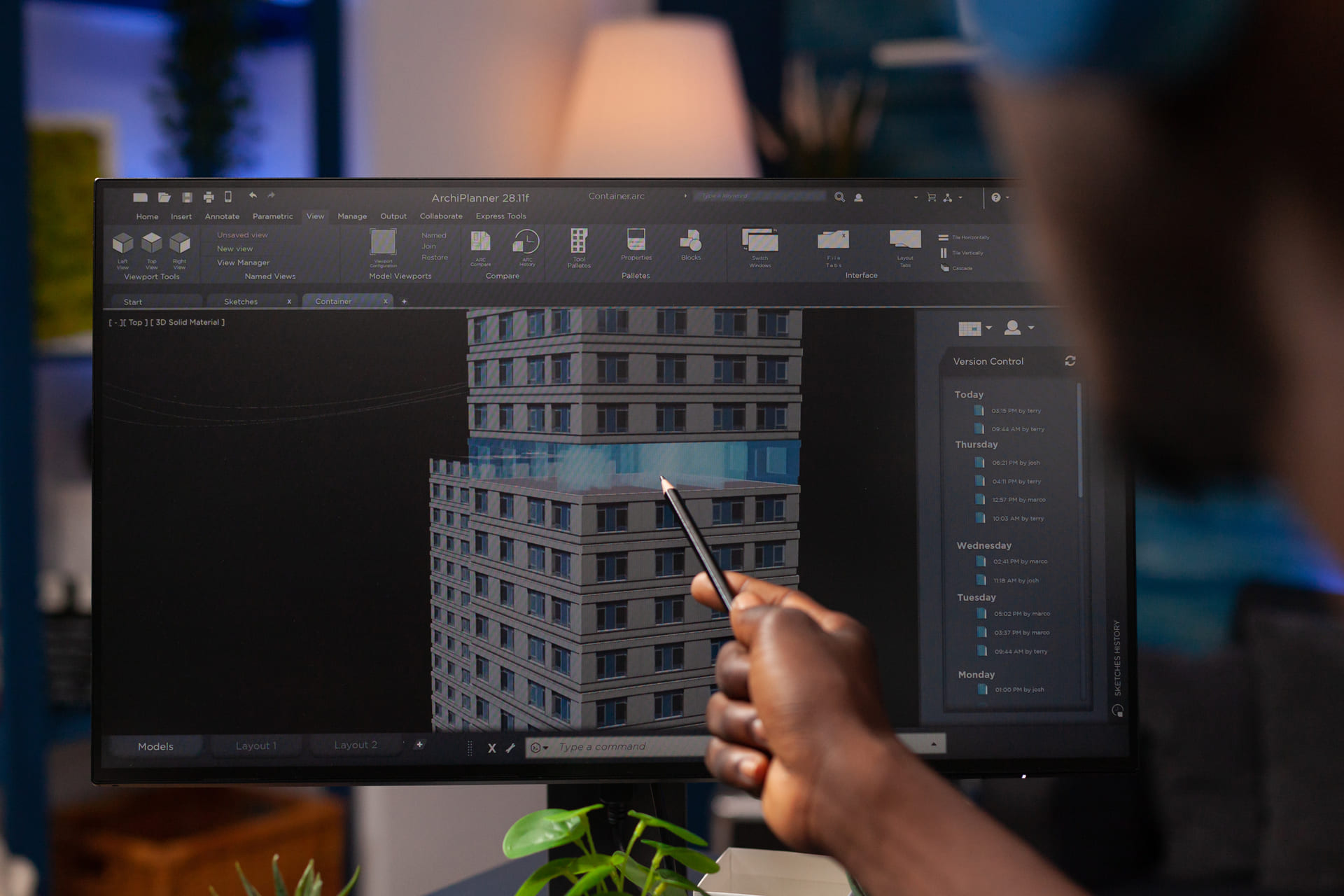
3D architectural modelling renders every detail of a building in three dimensions, from its exterior appearance to its interior layout. By enabling realistic presentations of architectural projects, this technique makes decision-making easier for investors, clients and project stakeholders. Interior design schemes are also brought to life through this type of modelling. Decisions such as material selection, lighting planning and furniture placement are simulated in 3D, delivering a far more efficient planning process. Living spaces can therefore be visualised almost exactly as they were imagined.
3D Character and Organic Modelling
Indispensable to the games, film and animation industries, 3D character modelling covers a broad spectrum of work, from purely imaginary figures to the human body. Anatomically correct proportions, texture work and facial expression detail take centre stage here. Organic modelling demands more detail and originality than hard-surface objects. Used for human, animal or creature models, this technique forms the foundation of 3D modelling and animation work. Combined with animation, character models give projects depth and narrative power.
Architectural and Furniture Modelling with 3ds Max
3ds Max is among the most widely used 3D modelling programs and is particularly favoured for architectural visualisation and furniture design. Thanks to its advanced lighting, material mapping and rendering capabilities, designs can be presented with photographic realism. For furniture manufacturers and interior designers, models prepared in 3ds Max are a major advantage in giving customers a visual impression before purchase. This increases customer satisfaction and smooths the sales process.
3D Modelling and Animation Solutions
3D modelling produces not only static visuals but moving scenes as well. 3D modelling and animation solutions are indispensable for product launch videos, architectural walkthroughs and virtual reality content in particular. This service increases user engagement, makes technical details easier to grasp and lends presentations a professional finish. Animation makes even highly technical projects easy to understand.
Advertising and Marketing-Focused 3D Modelling
One of the factors that sets brands apart in their digital marketing strategies is the use of 3D design modelling. From social media content to interactive product showcases, 3D visualisation makes it possible to prepare eye-catching material at many touchpoints. In highly competitive sectors especially, prototypes produced with high-quality 3D printer modelling both accelerate the launch process and strengthen product perception. That feeds directly into conversions.
Professional 3D Product Modelling Services with MegabelSoft
MegabelSoft delivers professional 3D product modelling services that take brands' digital assets to the highest level. High-resolution models are built from real product data, reproducing the product's details, dimensions and materials exactly. Brands can therefore offer potential customers the closest possible experience to the physical product. Working strategically from the first step of the design process to the last, our team treats 3D modelling not merely as a technical exercise but as part of the wider marketing and communications strategy. Supported by rendering and animation services, the models are delivered professionally for use on e-commerce sites, in catalogues, presentations or advertising videos.
Professional 3D Modelling Services Based in Antwerp
As Antwerp establishes itself as one of Belgium's rising cities for the creative industries, Antwerp 3D modelling services are increasingly in demand. The growing number of technology and design-led firms in the region has brought with it a need for high-quality visualisation. In response to this rising demand, MegabelSoft provides 3D modelling services from its Antwerp base and acts as a solution partner to many companies both locally and nationally. Covering everything from architectural projects to product launches, this approach makes a significant contribution to the region's digital production capacity.
How Is 3D Modelling Done?
A 3D modelling project is not simply a technical exercise; it is a multi-stage production process that brings together planning, visual storytelling and communication skills. Every stage must be planned meticulously for the project to succeed. Here are the core steps of the 3D modelling process:
1. Concept Development and Strategic Planning
Every project begins with a proper analysis of the brand's or project's needs. At this stage the target audience, field of use, visual style and tone of voice are defined. Sound planning during concept development directly influences every subsequent step of the project. Strategic planning is shaped by the platforms on which the visualised product will be used (web, social media, presentations, print and so on). This produces a roadmap that meets both technical and creative expectations.
2. Gathering References and Technical Detail
Technical drawings, photographs, measurements and material information relating to the object to be modelled are collected at this stage. Where a 3D scanning and modelling service is required, a physical product is scanned, transferred to the digital environment and used as a reference. The more detailed the reference material, the more accurate and higher-quality the resulting model. This is also the point at which the software to be used is decided (e.g. Blender, 3ds Max, Cinema 4D).
3. The Modelling Stage and Building the Structure
At this stage, work begins on building the three-dimensional structure from the available data. The model's geometry is created in line with its basic volume and proportions. If 3D printer modelling is planned, the model must be prepared in printable formats. Precision is extremely important here. Dimensional accuracy is critical for the end use, particularly with product models. Once the modelling process is complete, the "bare" model is ready.
4. Detailing, Texturing and Material Assignment
Once the model is complete, surface detail, material information and textures are added for a realistic appearance. At this stage the reflections, roughness and colour gradations of surfaces such as wood, metal, plastic and fabric are worked up. 3D modelling programs offer extensive material libraries for this detailing work. Texturing has a direct impact on the model's aesthetic quality. Techniques such as UV mapping, bump maps and normal maps are used here to increase the level of realism.
5. Rendering, Animation and Post-Production
Once modelling and material work are complete, the scene is prepared and rendered. Rendering reveals how the model will look in a real environment, complete with light, shadow and ambient effects. Resolution and format settings are determined by the platform on which it will be used. If the project involves 3D modelling and animation, camera moves, object animations and effects are added to the scene. Post-production covers work such as colour grading, logo placement and audio integration.
6. Delivery and Preparation of Usage Formats
In the final step, the project is delivered in the formats requested by the client. These may include extensions such as .obj, .fbx, .stl, .glb and .mp4. Depending on the type of project, both stills (renders) and moving content (animations) may be included. Platform-specific optimisation is also carried out on delivery. A model prepared for e-commerce, for example, is supplied as a low-poly, fast-loading and mobile-friendly asset. This has a direct impact on the user experience.
Technologies and Software Used in 3D Modelling
As technology has advanced, 3D modelling processes have become faster, more flexible and more creative. 3D modelling has evolved into a professional production process supported not only by software but by powerful hardware infrastructure. Today's software, with real-time render engines, advanced simulation plug-ins and AI-assisted detailing tools, makes it possible to achieve high-quality results in far less time. 3D scanning technologies have also taken on an important role in modelling work. This technology allows physical objects to be scanned with high precision and transferred to the digital environment. In industrial design and 3D printer modelling in particular, these technologies bring both speed and accuracy to projects. High-resolution monitors, dedicated calibration tools and powerful graphics cards complete the visualisation set-up.
Programs Used in 3D Modelling
The software used in 3D modelling varies according to the type of project and its intended purpose. Different specialisms, such as architectural visualisation, character design, product modelling or animation, call for different programs. Architectural projects tend to favour software such as 3ds Max and SketchUp, while Blender, ZBrush and Cinema 4D come to the fore in character modelling and animation work. Industrial product design, meanwhile, relies on CAD-based programs such as SolidWorks or Fusion 360. These programs ensure the dimensional accuracy of products while setting out technical details clearly. For texturing and material work, software such as Substance Painter plays a critical role in raising the visual quality of the model. Choosing the right software is decisive for the project's timeline, output and quality.
The Advantages of 3D Modelling for Brands
3D modelling delivers significant benefits to brands not only aesthetically but at an operational and strategic level too. Being able to create digital prototypes before physical production has even begun saves considerable time and money during product development. Design faults are caught early and the production process becomes more efficient. In increasingly digital marketing strategies, 3D modelling allows brands to showcase their products in a more compelling and eye-catching way. Interactive presentations, rotatable product visuals and animated showcases all improve the user experience. Being able to visualise different product variations quickly also brings flexibility and speed to marketing campaigns, which feeds directly into conversion rates.
Sector Applications for 3D Modelling Services
3D modelling is by no means limited to the creative industries; it has broad application across many sectors. Architecture and interior design are among the most common. 3D modelling allows spaces to be visualised and presented to investors before construction has begun, speeding up decision-making. In e-commerce, 3D product modelling lets customers examine products in detail. Replacing traditional photography, these interactive models improve the online shopping experience. In the games and animation industries, 3D character modelling increases the realism of virtual environments and characters and raises user engagement. Modelling is also used in technical fields such as healthcare, education and manufacturing to produce training materials, simulations and prototypes.
3D Modelling Service Prices
3D modelling prices cannot be reduced to a fixed range. Because every project differs in scope, complexity, delivery timeline and required outputs, costs are shaped by those variables. There are significant differences between product modelling projects and architectural visualisations in terms of both time and content. Details such as the delivery format and whether animation is required also have a direct bearing on price. Because a 3D modelling and animation project demands more time and labour, it may require a higher budget than static visualisation. Software licensing costs, the level of detail and the number of revisions requested by the client are likewise factored into the total fee. For an accurate price, the supplier needs to prepare a bespoke quotation based on the project details.